Tuesday, December 28, 2010

Diaper Punishment High Chair

Abstraction and capitalism


Note su Marx


di Raffaele Sbardella (1998)


[ article that appeared in Issue 6 of "Vis-à-Vis. Papers for the autonomy of class, " 1998]

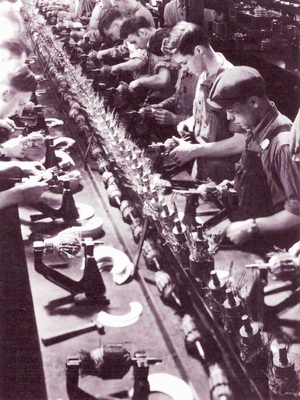
From theory of fetishism and alienation that finally the theory of abstraction from this reality (the latter theory that the truth of the first two), the tradition of critical Marxism , the heretic and liberal, always tied to the great cycles of collective subjectivity , crossed with powerful theoretical tools and a radical critique of the history of capitalism up to reunite nella fase attuale gli esiti estremi del suo sviluppo alla struttura veramente fondante del pensiero di Marx.


Tutti i passaggi analitici di Marx manifestano momenti particolari di vita dell’ Astratto : la forza-lavoro, il lavoro vivo, il lavoro oggettivato, il valore, il plusvalore, il profitto; e ancora la merce, il denaro, i prezzi..., sono tutti momenti fenomenici dell’Astratto; luoghi in cui si incarna e si manifesta occultandosi il movimento stesso dell’astrarre, unico principio di reale unificazione della società e assieme fondamento del feticismo e origine di ogni alienazione. Ne siamo consapevoli, può sembrare un ragionamento di tipo hegeliano, ma in realtà non lo é: é la realtà sociale stessa ad essere semmai strutturata come il pensiero di Hegel.


Il lavoro mentale , massima estrinsecazione dell’astrazione del lavoro in atto, e per questo privo di veri saperi, scisso del tutto dall’attività fisica del corpo ; lavoro fondamentalmente residuale, concentrato nel luogo originario della coscienza, centrato cioè sull’ intenzionalità , richiesto dal capitale proprio per la sua capacità di creare ex nihilo la scelta e di produrre l’evento di cui necessita la rete macchinica del processo produttivo informatizzato; lavoro qualitativamente diverso sia dal lavoro intellettuale ricco comunque di saperi e di creatività, sia dal lavoro inintenzionale centrato sulla ripetizione dell’azione manuale – questo lavoro, [...] ci rimanda ad una forza-lavoro intesa come forza-intenzione


Monday, December 27, 2010

Krystal Summers And Trina Michaels

Small is bad? Still on the myths of the "post-Fordism" At

di Maria Turchetto (1998)


[ L'articolo è apparso sul n. 6-7 della rivista «Collegamenti Wobbly», new series, 1998-1999. See the same author, Fordism and Post-Fordism ]

Let me suggest some other comments critical of the current notion of "post-Fordism" is becoming a worrying "thought only of the left", inspired by Article Viscount of Grisi published in the previous issue of the magazine and suggesting some other reading "out of the choir" post-Fordist.

rightly concerned in, Grisi first put on guard against hasty generalizations of the phenomena of de-industrialization , decentralization of production and prevalence of small industry . On the one hand, according to the author, these phenomena are particularly pronounced in Italy, "are an expression of a particular relocation of this country within the international division of labor in ways certainly more peripheral, and therefore are in no way generalizable [1]. On the other hand, the features you would like the typical post-Fordist decentralization, "almost a kind of return on capital at the age of manufacture, or even craft [2], do not seem borne out by empirical data.

In fact, I myself feel that for real processes - That should be investigated further, however, in their actual size and incidence in different countries and different sectors - has engaged an interpretation strongly ideological , which then ends up meeting the ideology par excellence of our time, namely the defense of neo-liberal market, "thinking only of the right" but now attracts unsuspecting theorists of the left.

1. No doubt the "crisis" - or "restructuring" - began in the '70s has cracked some certainties, widely shared not only in Marxist area [3] about the trends of capitalist development: the tendency to increase in size of , which seems contradicted by the extensive process of decentralization, the renewed importance of small and medium enterprise., and the related trend towards monopolistic structure ( oligopolistic) market, which seems contradicted by the great return of competition, competition in a market consolidation, which today would recover its function as a rational mechanism and optimizing not only against state interference, but also against the distortions introduced by the giant companies.

Certainly it is no exaggeration in the first tackle questions related to the uniqueness of these trends (Perhaps based on a false evidence that what develops necessarily become "increasingly large") and then nell'enfatizzare exaggerating their reverse (what has fueled real legends, like those of "post" of "small is beautiful", a "perfect competition" which in the best traditions of thought neoclassical restore the sovereignty of the consumer ...).

To avoid errors of perspective and forth, I think it necessary - as I have repeatedly argued [4] - to overcome both the 'ideology of the stages "cumulative and irreversible, so the 'ideology of post- ", ie the radical transformation that would leave us with an unrecognizable to the point of capitalism is no longer capitalism but - for example, delusions of Negroes in the past - a free entrepreneurship mass" ideologies in the end affects comforting idea that the story works for us. Personally, I find it interesting some processing - very minority - which underline the recursion or cyclicality of certain tendencies. I think for example to Arrighi, who speaks of "stages of material expansion" and "stages of financial expansion [5], the latter typical times of crisis and restructuring of the system, or the fat, which speaks of "stages monocentric" and "polycentric phases [6], adopting a terminology for the truth that brings a little 'off the road indicating the geopolitical balance of capitalism more transformations that its "structural" - if I pass the word - which, in my opinion, are still looking into that world production of where, as Marx said, the writing stands No admittance except on business .

2. But about it just the fat, in some of his recent work [7] has put his finger on a point gentle enough: where production takes place? in the factory or in ' business? What is the difference between these two entities? And what are the boundaries of 'business than market? The Fat brought to this effect, a reinterpretation of the so-called theories of organization, namely, those theories that challenged the methodological individualism applied to the company as subjective decision-making unit rather complex organization [8]. Theories to explain the above born large company, but also say something about the phenomenon of decentralization production. The most valuable element of this heuristic in these theories seems to be the message of the mobility of the border that separates the 'inside' from 'outside' the company, and therefore in the indication that business and the market should not be regarded respectively as the subject and as an environment (external) in that such entity operates, but how different relational principles , connoting the report "marketable" as equal and uncertain and the constitutive relationship of the 'enterprise' as authoritarian and hierarchical, having as content the 'internalisation mercantile report [9 ].

Based on this concept, one can take the first step by saying that the market is perfectly competitive monopoly and market completely represent theoretical extremes, while the existing economic structures are actually a mixture of the two principles , unbalanced in one direction or another depending on the cost (respectively, transaction and organization ). A further step is to observe that the combination of the two principles is not distributed randomly in time and space, but seems to have a "recursion", alternating phases of prevailing principle of organization (and internalization) and therefore structure and a more monopolistic market Big Business (Steps calls "material expansion" by Arrighi), and phases in which prevale invece il principio di transazione (ed esternalizzazione) e dunque una struttura più concorrenziale e Small Business (le fasi di "espansione finanziaria").


Potremmo a questo punto fare un lungo elenco dei motivi che attualmente spingono in questa seconda direzione, e marcare l'accento sull'uno o sull'altro a seconda dei nostri "gusti" (delle nostre ipotesi interpretative guida). Chi tiene a presentare la crisi iniziata negli anni '70 come un risultato delle lotte operaie potrà sostenere che è difficile mantenere complesse strutture di controllo gerarchico e autoritario in presenza di forti livelli di conflittualità operaia, e che dunque il parziale smantellamento complex organizations respond to a defensive strategy of the capital. For my part, I tend to consider the capital accumulation as a kind of roller that goes on his way guided principally by the rate of profit, cyclically shifting resources from old to new areas. If this is true, the stage is a delicate moment of transition, characterized by two sets of processes. On the one hand, the ongoing restructuring involves divestments from mature sectors deterritorialization and large parts of these areas (which does not mean that these are smaterializzino and float in the air, as a part of the debate on "globalization" tends to believe, means that they are moving to different areas, redesigning a new international division of labor), which involves the dismantling of the old physical and organizational structure, which must be literally torn to pieces. " Second, the new investment , looking for areas that can give change to those obsolete in tow accumulation, they take themselves to their small size, which allow you to download and diversify risk, to "experiment "on a scale initially reduced new techniques and products, etc..

3. Beyond these considerations, the functionality of the decentralization process to shift to a new cycle accumulation (in this sense I disagree with the opinion that Viscount Grisi concludes the article said, arguing that the current phase "can be defined as the initial capitalist decadence" [10]), I would nevertheless like to stress that in this situation the ' emphasis now placed on the market not just a phenomenon of "ideological", but an effective organizing principle and - add - of discipline (in this sense, a phenomenon of "ideological" in the strong sense of the term and complex, not a story put about to attract the suckers, but something far more effective ).

Take, for example, the Toyota built at Fiat's Melfi Italian [11]. On the one hand, there is the phenomenon of outsourcing a large part of production, "time out" on a number of small businesses for about 65% (with a reversal of the previous ratio, in which domestic production of components covered 65% and only 30-35% came from outside firms): In this sense, "more market" or market more Small Business . But the interesting thing is that the internal organization is inspired by the market model, giving some extent the principle of hierarchy, or - as rightly suspected Laura Bow - Concealment. In the "cellularisation manufacturing process [12] held in Ute (elementary technological units), each Ute is in fact designed as a lower case" enterprise ", supplier and customer uterus located downstream of that place before.

This produces, above all, an effect markedly ideological : for each "customer" stand, all for the end consumer, the new capricious ruler who refused the product of mass production has made it mandatory, flexible (Laura Bow Calling this ideological effect "effect kanban", stressing that this organization is not determined by consumer choice, but from the objective of manufacturing stocks to zero [13]). But it also produces a powerful effect of disciplining It is not the direction you FIATA directly on the neck, but the Ute expects the next piece: "workers who bring other workers to 'want' to work with the material" [14 ]. This discipline involves, of course, the external firms, stressed by just in time and driven by the appearance of an 'obligation of result "(the non plus ultra of freedom of contract) to step up pace and conditions of exploitation.

The governing principle in this delightfully mixed structure "Enterprise" and "market" is just in time (which then, as in fact, is more than a policy of rationalization of inventory and warehouse). As for the "market" and its principles, in this view it is far from the realm of freedom and democracy, and looks rather like another way to exercise control and discipline: as also Laura Bow, "the Fordism provided a control system at work through a hierarchical oppression, now recognized by all for what it was. ohnismo In contrast, the change (really) the way of exercising control [...]. The new organizational logic makes no only possible but also necessary both the partial reduction della struttura gerarchica dell'azienda sia un comportamento 'non piè militare' dei capi' (come dice uno dei responsabili del personale della Fiat). Ma ciò non significa che la direzione abbia rinunciato al comando, bensì che lo sta esercitando in forma diversa"[15].


Infine, non è detto che la tendenza al decentramento sia irreversibile, dal momento che la nuova organizzazione – a dispetto della vantata flessibilità  – introduce forti elementi di rigidità nel coordinamento dell'aumentato numero delle unità (interne ed esterne) in cui è scomposta la produzione. Alcuni recenti casi clamorosi (Eg, failure to deliver just in time a supply of mufflers has blocked the production of the Piaggio Pontedera) showed the fragility of producing "zero inventory", and many have reported significant reversal of the trend in this must postfordist. Recovered profit margins due to increased exploitation possible, it is said that the risks and transaction costs "does not prove to be too high again and suggest new processes of internalization and concentration of production.


Notes:

[1] V. Grisi, The Discreet Charm of post-Fordism , in "Links Wobbly 'new series No 4-5, 1998, p. 38.

[2] Ibid, p. 39.

[3] of course I think the American neo-Marxism of Baran and Sweezy, who say: "The monopoly capitalism is a system composed of giant corporations [...]. The dominant factor, the prime mover is the large firm organized in giant corporations [...]. From the standpoint of a theory of monopoly capitalism, the enterprise should be properly regarded as a lesser part of the environment in which the corporation rather than as a player on the scena" (P. A. Baran, P. M. Sweezy, Il capitale monopolistico , Einaudi, Torino 1968, p. 45). Ma anche ad autori di impostazione keynesiana come Steindl (cfr. J. Steindl, Piccola e grande impresa , Franco Angeli, Milano 1991; sull'influenza esercitata da Steindl e dagli altri "stagnazionisti" sul pensiero di Sweezy hanno dato un contributo fondamentale gli studi di Marco Bonzio, purtroppo interrotti dalla sua prematura scomparsa; si veda M. Bonzio, La teoria economica di Joseph Steindl , in «Economia politica», n. 1, 1994) e allo stesso Schumpeter di Capitalismo socialismo democrazia (J. A. Schumpeter, Capitalismo socialismo democrazia , Etas libri, Milan, 1984).

[4] Reference example to my phases or cycles of capital? , in "Alternative Europe, No.3, 1998, pp. 49-53.

[5] See G. Arrighi, Workers of the world at the end of the century ; the article, translated by Anna Vitale from the English version appeared in the journal Review, Summer 1996, Volume XIX, No. 3 with the title Workers of the World at Century's End , can be found online under "News and discussion" of "InterMarx, virtual magazine of analysis and critical material ', http://www.intermarx.com/


[6] Si veda G. La Grassa, Note sulle ricorsività e le crisi , sempre nella rubrica "Temi e discussioni" di «InterMarx, rivista virtuale di analisi e critica materialista», http://www.intermarx.com/ . Una versione ridotta di questo articolo è stata pubblicata, col titolo Note sulla ricorsività , nella rivista «Alternative Europa», n. 4, 1998, pp. 48-54.


[7] Cfr. in particolare G. La Grassa, Dell'impresa : anche questo articolo può essere consultato in rete nella rubrica "Temi e discussioni" di «InterMarx, rivista virtuale di analisi e critica materialista», http://www.intermarx.com/


[8] In particolare, La Grassa fa riferimento alla "teoria dei costi di transazione", sviluppatasi a partire da un famoso contributo di R. Coase, The Nature of the Firm («Economica», 1937; oggi lo si può trovare tradotto in «Formez. Problemi di amministrazione pubblica», quad. n. 18; nello stesso quaderno, si segnala l'interessante rassegna sulle teorie dell'organizzazione di T. M. Moe, La nuova teoria dell'organizzazione ).


[9] "La teoria [dei costi di transazione] are of some importance since it puts the company in an area of \u200b\u200bcontinuity (and contiguous) with respect to the market. The traditional economics, at least in large part, tends to regard the market as a company and actually quite separate and conflicting, and the economy of derivation Marxist critique is no different in this regard, given that it is the site of the market ' anarchy and the absence of the project, while the enterprise is the planned headquarters organization of the productive forces by the agents of capitalist production "(G. The Fat, company, cit.)

[10] V. Grisi, The Discreet Charm of post-Fordism , cit., P. 42.

[11] Using the excellent analysis here especially Laura Fiocco, and in particular Kanban effect in work at Fiat's Melfi , in "Chaos", n. 10, 1997, pp. 9-30. This provision is now available online under "News and discussion" of "InterMarx, virtual magazine of analysis and critical material ', http://www.intermarx.com/

[12] ibid. 12-15.

[13] "The division in Ute [...] makes it possible to support the transfer of the control function from market in the form of orders by customers / users up along the line, seamless, customer-producers (the Ute) [...]. The strengthening ideological is the fact that the 'orders of the consumer' vehicle 'blind competition law'. Not only, therefore, workers would work from a consumer pulled rather than pushed by the autocratic direction, but would also have the same interests of the company to satisfy customers "(ibid., pp. 17-18).

[14] Ibid, p. 17.

[15] Ibid, p. 19.

Saturday, December 25, 2010

Blood Plasma Donation Centers In California

origins of the radical critique ...

is now available in Italian translation ...

Le Roman de nos origines.
The origins of the radical critique

Gilles Dauvé [Jean Barrot] Le Roman de nos origines. The origins of the radical critique , by Fabrizio Bernardi, Dino Grass, Antonio Pagliarone, Pages Marxist Papers, Milan, 2010, 304 pages, 15 € (shipping included).

"Talking about communisation , is to say that the coming revolution will not have any sense of emancipation, nor any prospect of success, if not initiating immediately communist transformation of reality at all levels - from food production to how to eat, going the way of moving and living, learning, traveling, reading, lounging, love, not love, to discuss and decide our future etc.. "Communisation" does not make it free and available to everyone, what already exists, from the phone to nuclear power, from the home culture to the bakery on the corner. If so, we preserve these resources and places of production and consumption, just purge of their mercantile character: our life is the same, only without the money, the owner and the cop. Communisation means, on the contrary, transformation, beginning, as it was in the seventies - long before ecology and the 'decline' became fashionable - from the "closing of half of its factories."
"This process does not replace but accompanies and enhances the destruction of the State necessarily violent, and all the political institutions responsible for the defense of the goods and wage labor. This transformation, on a global scale, undoubtedly will extend over a period of one or more generations. This does not imply, however, you must first create the foundations for a future society, destined to only be established after a more or less long phase of transition. "

Appeared in the first issue of French magazine" The Banquise "In 1983, Le Roman de nos origines is the first attempt to trace the roots of the historical and theoretical perspective radically Communist who goes by the name of radical critique in the light of a current budget of the main revolutionary of the past and great social movements that, over the course of the twentieth century, have shaken the capitalist society in France and throughout the world. We publish here, in Italian translation, excerpts, accompanied by an extensive critical apparatus and bibliography, and accompanied by two other texts - also previously unpublished - by Gilles and Karl Nesic Dauvé: From the Left Communist 'communisation "and communisation, but ...

Le Roman de nos origines has nothing to do with the waste of national-communist parties, that is, with churches of various Trotskyist and Maoist observe that animated the political scene in the second half the last century. The book critically examines the theoretical and practical contributions of the main trends of the Communist Left that, since the early twenties, were able to detect and analyze the ebb of the Russian Revolution, Socialisme ou Barbarie and the Situationist International, which collected the inheritance; Finally, minorities and radicals who, in the wake of May '68 in France and other countries, he attempted a synthesis / overrun.

*

The book can be applied directly to the editors:

Fabrizio Bernardi (Bologna):
marinusvanderlubbe11@gmail.com

Dino Erba (Milan):
dinoerba@libero.it

Pagliarone Antonio (Milan):
antonio.pagliarone @ fastwebnet.it

or

'Pages Marxist'
redazione@paginemarxiste.it

*


Thursday, December 23, 2010

Do You Have To Pay For Typhoid Vaccine

appeal to the proletarians of Europe

France (2010)


Prom Dresses For Under 50$

hot coals in the winter ...


... or, what was this strange student movement?

On the one hand, it was another cold spell.

You could feel something too fake, too tarot, the air we breathed in the last few weeks, in the slogans that were sung in procession, between the lines of newspaper articles.

If you read The Republic without leaving home, not knowing what was happening in the square, you could get the impression that he was breaking out the insurgency in Italy. Clashes over the world, the country blocked the government ready to fall. Then there was the reality of the square of the occupations. Beautiful, but had nothing to do with what you might read in the press.

This teaches us that the left appear as dead, know still use his old tricks. They just pumped this "movement"! The Republic, the CGIL, the left parties and also all who have not left a single obsession: to bring down Berlusconi.

They wanted to make up for the Wave. The Wave: a perfection hitherto unpublished in the marketing of the dispute. A wide generational scam. should be taught in the training of every political party: a good name as a surfer on the beach, songs that sound good, reproducible actions, a clearly defined enemy. And then, nothing. The house of cards collapses, the operation is fallita, si proverà di nuovo tra due anni. E l'hanno fatta ripartire quella macchina! La metafora questa volta non è più il mare ma il cielo: tutti sui tetti, tutti sui monumenti!


Gli studenti e i ricercatori sui tetti, i monumenti occupati, i cortei enormi: questo è stato il lato spettacolare di questi giorni. Di questo si è parlato, scritto, dibattuto tanto e ancora tanto. Tutto questo teatro ha sopratutto permesso di nascondere l'altro lato del movimento . I sinistroidi, tutti esaltati, si felicitavano: non si parla più delle minorenni che si scopa Berlusconi, si parla della legge Gelmini, dei tagli, della politica. Another veil to hide the obvious, to delay a little 'off the inevitable, to continue to believe in the dream, even though we are now all awake.

Security forces have played their part: a few batons, a little 'blood here and there to bring back the indignation that seemed to disappear along with the left. The "radicals" were wearing helmets and made from some smoke, which is always nice scene on the photos. confrontation no one wanted to go. The G8 meeting in Genoa is still in the heads of everyone from both sides.

The movement has thus played mostly on the virtual plane, why go to the real one would open the door to a power that would fall far more than the government, which could put an end to all forms of government. The left knows this, because this port is already opened three decades ago to close it and the price was very high. Many have paid with their lives. The left will always be the best guardian of this door, avoiding at all costs that the fight goes on the real plane.

summer in Italy there is an atmosphere at the end of the kingdom. On all channels of the show speaks only of the re-clown, is to defend that to lynch him. He speaks especially of its end, how close will this policy parentheses. The only content of the left over the past few years has been the antiberlusconismo. moral opposition to the character, instead of political opposition to the state of things of which he is only the most grotesque enactment. Here's how the discourse of legality has become the alpha and omega of the Italian left , the obstacle that always comes in when trying to affect this, and that can not be overcome for many years.

Thus, it is the end of a reign. But this end, this Apocalypse, had nothing to do with Berlusconi. This is the end of the world.

From another First, a fire was able to warm up.

The feeling of the end of this world, it lives in a while. Not every day. It lives when it is too obvious the distance between the living and its image, between what we live and what you see. This feeling we have often tried in recent days. Is becoming more pressing. It calls us to action.

occupations of schools and faculties all the talk about "movement" - both those who supported him and those who denounced him - often seemed out of place. Gelmini, its fucking reform, the public university, the government, among politicians Scazzi ... All this sounded absurd every day, further away from what was going through, stuff of another world.

The buzzwords that come from the coffers of the vans during the marches no longer understand. But what the fuck are they talking about?

We talk about rights, but these rights which set out the constitutions of every country in the world, these millions of pages of laws, contracts, codes that govern every aspect of life, not ever make us happy. But what is the point in this lifetime warranty?

We talk about giving more money to the school everywhere while the money does not lead to destruction and desolation. But money to do what? Researchers, but to find what? How to make more of this earth and its inhabitants? How to make more shit for a lower price? How to live longer by giving up everything that makes life worth living?

They speak to us to make this ruling out and replace it with another less asshole. But pig god, why on earth should we need to be governed?

in occupations, in the streets, assemblies, were asking questions of a different kind. Political issues. Category: How to organize a lunch for all workers in the faculty? How to effectively block the station? Like being with others who struggle anywhere else? How to get rid of the police? From this point of view, this movement was above all a meeting point . And every meeting is a real event. The meeting is what the story is woven. Many boys and girls who first crossed in the corridors of schools are now ignoring a real power . Capable of better and worse. These various paths met sweeping the kingdom of indifference. And when the press and television will not talk more movement, when protesters took to the roofs will be spectacular, what will? This power will remain. That's where the beauty of this strange Italian autumn. That's where the light in the darkness. Recognizing and collecting this light we build the movement that irreversibly bury the old world.

During the blockades, occupations, escapes from the police, the city has changed its face, as if a new map is superimposed on the existing one. During the actions of these days, have learned what are the key issues involved in running the economy of the metropolis. This too will .


Finora spostarsi nella metropoli voleva dire andare da casa a scuola, dal lavoro all'aperitivo. In questi giorni invece, sapersi spostare nella metropoli ha voluto dire saper stravolgere la funzione dei suoi dispositivi, trasformandoli in mezzi atti al nostro scopo. La velocità della metropolitana ha permesso di essere ovunque alla faccia degli sbirri. Gli spazi delle università occupate sono diventati un rifugio e una base di attacco.


Una stazione occupata a Milano, un'autostrada bloccata a Bologna, un esproprio a Genova: da una città all'altra si passa la parola, si diffondono le pratiche. Un'emulazione senza centro, senza direzione. Una staffetta che passa per Londra and to Athens. These images that we see to enhance certainty that the moment we are living has nothing to do with the law Gelmini but part of something much deeper. They are not to be seen as examples to follow, but as for now scattered fragments of the same fire that will never fade.

[Flyer distributed during the day in Milan on 14 December]

Monday, December 20, 2010

Names For Different Turquoise

/ 2 NUNZIA

Cara Nunzia

but agree with different concepts, I believe that our thinking is common. We civil servants are trying to do our job well because we're all proven ourselves to be useful and capable. Also ended this stimulus, all would be adrift. Although our commitment is aimed to make us feel good especially with ourselves, it is still difficult to accept certain behaviors from the neighborhood Furbetta fellow neighbor. Perhaps I'm too proud a person and be "bypassed" or "scrubbed" it gives me very, very annoying.
We both work in a university where l’elevata qualità del servizio è sotto gli occhi di tutti, ma non per questa ragione si devono prendere a pretesto certi risultati per fare ciò che si vuole, alla faccia di chi rispetta le regole.
Ultimo pensiero: con “trenta e lode” non ho voluto criticare, come certi pensano, i miei colleghi di Scienze Politiche. Mi dispiace che alcuni abbiano visto nei miei racconti delle accuse specifiche verso quello o quell’altra persona. Con “trenta e lode” ho cercato di spiegare che il pubblico impiego così come è ora è difficile da governare, anche il più integerrimo, brillante ed efficiente dei dipendenti può cadere in tentazione, una tentazione due to lack of control and certain penalties.
It is said that "opportunity makes the thief" and I think that this, unfortunately, in helmets brush over a large part of public officials.
I tried to tell what's wrong, what needs to change in this area. We can only improve starting from their mistakes and not by the things you do well. Even in this part I wanted to tell with "thirty and praise," I hope that my intent is well understood by someone ...
Thank you for the surgery.
Alberto

Bedding Like Urban Outfittesr

reader comments / 5

NUNZIA

sorry if a bit 'late reply to your comment.
I agree on the mutual respect that right you write in all capital letters, but in my opinion are not only standards and controls some serious healing profiteers. Of course it takes, but when you carry the notion that "Charles" of the situation can be a good employee means that as a person has already had his principles are healthy, safe and reliable regardless of rules that a minister (I hope better Brunetta!) is launching or has launched; while the elusive Ms. Moretti is likely to continue and to his pigs furbeggiare comfortable (the law passed, did the trick). There must first be our growth as persons in a workgroup.
spend a few words on the concept of work is not often rewarding: I have 20 years of work behind the private sector, I have enjoyed several delicious and rewards, then I experienced a situation - economic - well other than that which I now live, but I can assure you, that does not always the weight of the paycheck or the level reached capacity demonstrated in the field, pays as a peaceful working environment.
You also say that the solution to a pressing problem, an issue complicated stresses me but gratifies me, not to impress others, but for myself. Everything I charge, it stimulates me to face another day waiting for the flat on Friday.
...... probably my flattening has not yet reached "alert levels" because it's just that I got ....
agree with the issue of meritocracy and I am convinced, from dreamer callous, that sooner or later something will change. I can teach my daughter, but perhaps first and foremost to myself because every time for convenience or stupid selfishness forget them or do not recognize them, those values \u200b\u200bthat you think is essential and for which it is right to fight at any cost.
...... piaceremi start this BLOG .......

PS
for the record in my first comment I had escaped to the error description of the character SONIA: nevertheless I am not unsympathetic, perhaps because she is a woman ?????? boh!!

Monday, December 13, 2010

Franchise Opportunities, Garrett Popcorn

THE RESPONSE OF THE AUTHOR / NUNZIA

Dear Nunzio,
Thank you so much for the nice words. With "thirty and praise" I tried to take stock of many themes that have characterized my first 30 years. To rattle off my ideas I have tried traveling companions who could tell me first, and then, seeing how things went, to my readers, what are the values \u200b\u200bto which we must believe in order to give meaning to our lives.
You have well said, friendship, love, honesty, loyalty, justice, are all essential elements on which we should find inspiration to succeed in building something important for ourselves, but especially for others.
As in reality, my characters are not perfect, they live in the light of their merits and defects of their darkest dark. Perhaps the beauty of the "thirty and praise" is just a normal feature of the protagonists, for whom in the coming weeks for each publish a little "special."
Regarding the issue of public employment, as stated in the book, the problem is not the employees that I deliberately called "profiteering" (not lazy), but the laws governing the system. If it is assumed that the commitment and fairness in the work depend on conscience of each public servant, you know too that the system can not handle.
telling certain situations I wanted to highlight the fact that the public can use to regain their dignity only with certain standards, controls, serious (I said "serious" and not "meaningless" as those imposed by Brunetta) and especially the ability to reward merit. The flattening, apathy and stagnation leading many employees to wedge between the graceful mesh fabric regulatory inconsistency to get those benefits are not always morally impeccable personal compensate them for a job is often not rewarding.
You are right when you say that is not how many minutes of sitting behind the desk that determine whether an employee is the most prolific and efficient than another, and not a song downloaded from the internet confirming the good from mediocre. I too am a civil servant and I think I can be the first to be scored between "bad" employees. But if a person is more brilliant, competent and prolific than me, but at the same time fail to comply with common thinking to work as if the VAT number, for me his skills come under the soles of my shoes. I believe that mutual respect is a key element for any group of people who decide to join for any purpose.
When you work as a team can achieve results only if all elements of the cart pulling the same side. Observed preference for some rather cunning or more or less hidden than others lead the viewer, if not encouraged by their own conscience, to give up and leave the group.
Remember? "Football is a metaphor for life" and I can assure you that in a class by itself does not win anything, but if he plays in a compact team can make a difference and achieve success.
Thanks for the insights
Alberto

Convert Wella To Matrix Color

reader comments / 4

NUNZIA
"Dear Albi,
first sincere congratulations !!!!!!!!!
!!!!!!!! Being able to give birth to a book is certainly not a trivial matter. Probably many have felt the need, sometimes, to throw down two rows, four thoughts ..... but something else is to imagine a story, develop it, enrich it with details, come to an end and bring it on paper bound book. Congratulations really because I've always felt a person who does not like to show off and then scoop with this year-end, I think I speak for many, I've really blown away, pleasantly blown away, I would say I am proud of my neighbor across the ....
The story is complicated in the sense that there is in everything: that bit of "yellow" with a final surprise, that a lot of "everyday life" in which the reader is often found, that a lot of "deep feelings" ( friendship / love / loyalty, justice) that many important values, I hope, for all of us are really important. You have connected so well that the players have not been able to have one favorite, good or bad I'm fond of all:
DIEGO - despite often reasons of "belly" - Can not be nasty, with his air Men upright, fair and clean.
-ALEX PHILIP - two cute, cuddly puppies to the bitter end
REA - Bova of the situation - great champion of justice, loyalty, values \u200b\u200bwith a capital
GUSTAVO - with the "due diligence" family continues the His hard work
Tarantino - selfish and ruthless man, but a glimmer of rationality, understands and accepts its limitations
BRAVO, ALBERTO, very good!!
The only drawback I've found, and I've already mentioned the topic, is the vision of work in public administration. Probably working at the University I felt stung. Reading some passages I had the distinct feeling (maybe mine) that the difference between lazy and not only compliance with the stamping and stimbrature during normal working hours. To me there's more, namely the good employee who regularly stamp the entry and exit non-break is at his desk when then what does? It 's a Rea or Tarantino? The situation might of Charles, after downloading a song from pc, it is a good technician and has good relations with colleagues. I do not know if I explained but maybe we will talk further. "

Thursday, December 9, 2010

Serienummer Paint Shop Pro Xi

about the "crisis"

Dauvé Gilles (1983)


  [Estratto da Gilles Dauvé, Le roman de nos origines, 1983 , Capitolo X, «Crisi e autonomia»; di imminente pubblicazione in traduzione italiana]


Troppo spesso si è adottata la crisi economica come criterio esplicativo. L’integrazione degli operai al capitale è stata spiegata ora con la prosperità (la carota degli aumenti salariali), ora con la depressione (il bastone della disoccupazione). Negli anni Settanta, nell’ambito della nostra corrente, alcuni ritennero che la crisi avrebbe inevitabilmente soffiato sul fuoco della sovversione proletaria; non tanto because poverty pushed the workers to revolt, but because the crisis showed "the fragility of the system, multiplying the opportunities for intervention proletarian" (1).
As for us, we make no apology for the crisis, much less celebrate prematurely 'goodbye' to the capital and the proletariat. Others are seduced by the economic depression and gaze upon the falling rate of profit as if, after passing a certain critical threshold, they must necessarily derive social explosion. Now, the question of the crisis is not an economic issue: the falling rate of profit is only the symptom of a crisis in social relations. Similarly, when Marxism adopts the point of view of capital, wondering whether or not factories are about to close, stripped of its social significance of the crisis.
The Second and Third Internationals have almost always conceived of the class struggle as a factor foreign to the genesis of the crisis. According to this view, when the economic cycle enters a downturn, mechanically the workers are put in motion the action of the latter has nothing to do with their internal wage relationship. In communist theory, by contrast, society is conceived as a unified whole and the class struggle, even when its content becomes a key reform, it is a key determinant of the crisis. In this context, the proletariat is placed in a position to blow up (or not) the social relationship that is involved.

«[...] Those who rely on a crisis of overproduction, with its trail of tens of millions of unemployed in all countries, it is determined that what they call "the taking of consciousness of the proletariat "is dangerously deceptive [...]. The great mass of unemployed will simply look for a job, precisely what is needed to restore the circuit poisonous goods [...]. Of course, Lenin, Trotsky and Marx himself, have sometimes believed to see in the usual cyclical crises revolutionary opportunity, but they never made the necessary condition of the revolution. The reality, however, was to act to deny all hope to do so, quite clearly, at the last real crisis (1929-1933) [...] The practical problems of the communist revolution were not then so much delineated through all the capitalist relations as they are today, when they are tested more and more unbearable as so many restrictions and unnecessary. On this basis, rather than starting from the hitch of the economic, that the working class must organize against the system.
"Gambling on the crisis of overproduction means giving up fight on a terrain that is not the most favorable to the enemy [...] initiatives class that will awaken the revolutionary consciousness, before tens of thousands and then hundreds of millions of workers must be taken from working conditions, not those of unemployment, and political conditions and life, considered in their various aspects. Revolutionary practice, today, finds its meaning in the denial of all the functional aspects of capitalism, and must counter any problems the solutions of the capital of the company's own communist revolution. As long as at least a fraction of the working class will not take this kind of struggle, regardless of the economy of the capitalist economy, not just a crisis ten times more violent than the last to prevent further Arcetri revolutionary consciousness. Why, out of the struggle to transform all structures and superstructures become reactionary and oppressive, even under the best working conditions, there can be no consciousness, nor in the working class nor by the revolutionaries.
"What should serve as a reagent to the working class is not the accident of a major crisis of overproduction, which would regret the 10 -12 hours of hard work in a factory or in ufficio, ma la crisi che colpisce il sistema di lavoro e di cooperazione capitalistico; che, questa sì, è permanente, non conosce frontiere e si aggrava anche in presenza di una crescita ottimale del sistema. Le sue funeste conseguenze colpiscono allo stesso modo le aree più industrializzate e quelle più arretrate, gli Stati Uniti come la Russia e i suoi satelliti. È questa la carta più importante che il proletariato mondiale può giocare. Ed esso ne prenderà coscienza assai più agevolmente in condizioni “normali”, piuttosto che sotto l’assillo della fame.» (G. Munis, Parti-Etat. Stalinisme. Révolution , Spartacus, 1975).


The decisive factor is never block the development or economic growth, but the configuration in such circumstances to assume the social forces. If in 1917-1921, the proletarian assault took momentum from a situation of economic and political crisis, after 1929, despite the arrest (including the partial) expansion of the twenties, the ratio of strength changed radically in favor of capital and of the Western bourgeoisie, as well as the counterrevolution in the USSR. While in the postwar period, although not with the best outcomes, the proletariat was able to take advantage of the political and social conflicts taking place in 1929 but was unable to take advantage depression: when the crisis broke out, the wave of his main assault had flowed, and the world, its defeat had already consumed. Today, the situation is completely different and yet the thesis of Munis its meaning seems to be intact, as evidenced by the behavior of the workers after 1974.
That was the year in which a crisis that manifested itself since then has continued to deepen. It affects the workers both directly (in the U.S., for the period 1979-1980, the purchasing power of wages has been reduced by 10%), or indirectly, as the unemployment heightens the competition with the sons of the middle classes for access to lower clerical levels. Contrary to what had happened in the Sixties, the layer of employees who until then had enjoyed a degree of protection (the adult worker, male, native, qualified and / or unionized) started to see their privileges eroded and now must face, in turn, the experience of job insecurity. The bourgeoisie shakes his crutches in the working world and streamline production by eliminating the less productive sectors and leaving social services to degradation. If at first, to overcome the loss of productivity, the capital had tried to step up the pace of work, causing the spread of strikes wild in the early seventies, from the middle of the decade has begun to restructure to fund the production. For seven years, workers who engage in defensive action, more often than not, receives only partial success. To the extent that the latter is just a response to the attacks of the first, neither the capital nor labor can win. The system's ability to absorb shocks that are unleashed is awesome.
The stakes of the struggle today is primarily the protection of wages and employment. The affair of LIP (2) represents the clearest example of a phenomenon that is characteristic of the phase: the common defense against the closure of factories. This type of struggle that sees employees is in the business community and remain imprisoned within it, had already appeared before the LIP, for example in the textile sector, and not remain confined within the borders of French or Europe: Japan has experienced many moves that have the same characteristics.
Contrary to what the workers of these work-in think or say - at least as far as I know - they do not seek to produce in a different way while still employed, but they are primarily looking for a company They become masters of themselves, waiting to find a true master.

"Outside these walls, we are nothing." (Joe Toja, 49, mechanic at Chrysler in Detroit, explaining why the workers refused to go on strike against their company in difficulties ).

These movements are born as a reaction to industrial reorganization. It happened that the workers of metallurgical example of Baden-Württemberg (1978), they did pay their disqualification in the capital, forcing the owners to guarantee, for employees affected by innovation technological equivalent of a job and a salary equal to the previous one. Obtained after 16 days of strikes and lock-outs 13, involving 240,000 employees, the agreement covers 40% of metallurgical Germans. But these are exceptions: for the moment, the reorganization is still in limbo, and as you know the projects robotics (3), ignoring the pace of its introduction. The question is anything but technical: the degree and timing of robotics, the forms taken by investment and innovation are a function of class relations. From a general point of view, it seems that the capital is no longer able to recycle the labor force that is expelled by the industry, as well as a recycled one time had expelled from the country.
It is clear that the fall in profitability was the result of the constraints on development due to excessive fragmentation of work, and the limits to the reproduction of capitalist totality of the conditions of existence, to the extent that it includes services that are not reproducible as consumer goods manufactured in series. Collective services can not deploy the same productivity of industry, if the State takes charge of them, you do so at the expense of total capital.
One possible solution is to move to a system of automated production, with a definition for its internal consistency ( feedback, self-regulation, planning, rather than simple execution of orders set) (4), in which the machines are "enslaved" or coordinated, in order to develop a system that is self-control. It is not so much to subdue the man, but to make it more productive. Of course, the employee will be supervised more closely, but what matters is that it will fit within an organizational framework that work, even in the absence of monitoring, will be executed in the manner prescribed, being sufficient for that purpose, constraints imposed by the machine.
It is, however only one aspect of the utopia of capital. For example, at the time when the 'job enrichment' was considered a remedy against the "work fragments" skilled worker (Georges Friedman) (5), was attributed to the experience of Volvo (6) a flow excessive, which transcended the very meager results at the social as well as economic: with or without the contribution of electronics, self-proletarian exploitation will never be a mass phenomenon.
To date, however, does not appear that the principal is able to release and allocate the enormous investment that such a restructuring would require. A general devaluation in the context of a social earthquake in the forms can not be foreseen, would certainly make it easier. The devaluation generated by a crisis is more than just an economic fact: it is a reshuffling of the cards within the bourgeoisie, a redefinition of policy, the emergence of new forms of power and new levels of mediation between capital and labor (as can be seen by considering the shock of the two World Wars).
From the perspective of workers, the stakes, as it was during the introduction of scientific work, is not represented only from wages and from work. It is here, the transformation of work itself, that capitalist development would make more consistent and better controlled by the company. It is clear that any simple task can be automated, but the choice is once more social in nature. If you need to transfer the production activity in areas where the workforce is cheaper, what do the increased number of unemployed in the advanced industrial countries? Conversely, if you decide to robotize the factory, how to respond to further requests of the employees? In 1974, the French automobile industry's skilled workers, mainly immigrants of recent date, advancing claims of conventional type. In 1983, the Renault, the OS attached to the painting, mostly second-generation immigrants who wish to continue to live in France, have struggled, in a ward in the process of automation, to obtain the grade as professional workers, which would ensure their relocation once the restructuring is over. Living materials divisions among the workers, unions are reluctant to support them, but can no longer ignore them.
[...]

Notes:
(1) 'International King Kong, "No 1, 1976, p. 3 [GD].
(2) See The myth of self , included in the card: Strikes and labor unrest in the early seventies in Le Roman de nos origines , Pages Marxist of imminent publication.
(3) The term 'robotics' was later replaced by the more correct "computerized."
(4) The reference is to the so-called CNC machines, machine governed by a computer whose diffusion large scale dates back to the eighties of last century.
(5) Georges Friedmann, Le travail en miettes , Gallimard, Paris, 1964, trans. com., work shattered , Community Editions, Milan, 1960. L 'ouvrier specialis (OS, skilled worker) is the equivalent of the so-called mass-worker.
(6) In the late seventies, the Swedish Volvo plants in their introduced a new type of organization of work, based on so-called "islands." Within each island, a single team of workers had the task of assembling an entire vehicle. Questa formula organizzativa si ispirava al «modello Toyota», ideato da Tahichi Ohno e meglio noto come lean production (produzione snella). Tuttavia, «l’esperimento fallì perché questa strategia è efficace solo come parte di un processo comune di produzione capitalista. Funziona laddove esiste una sottostruttura destabilizzata (sregolata) con diversi piani di fornitori di componenti e servizi». Cfr. Karl-Heinz Roth, Il ritorno della dimensione proletaria e le paure della sinistra. Possibilità e limiti delle politiche socialiste nella transizione al XXI secolo , intervento su «post-fordismo», toyotismo e insorgenze proletarie, contenuto in «Quaderni di Contro Informazione», No 5 February 1995. See also Laura Fiocco, The cellularisation workforce and forms of resistance to Fiat's Melfi , in "Links Wobbly 'new series, No 6-7, 1998-1999 and the same author, The effect of kanban in work at Fiat Melfi , available on the website http://www.arpnet.it/chaos /; Kim Moody, Workers in a Lean World : Unions in the International Economy, Verso, New York, 1997 and American Labor in International Lean Production (1996), in http://www.countdownnet.info / . [and Gilles Dauvé Karl Nesic have recently addressed these issues in We must still wait , Giovane Talpa, 2006].

Wednesday, December 8, 2010

Orange County Housewivesmonokini

your feedback / comments from readers

Jlenia

" A connubio tra semplicità e profondità: questo per me è ciò che racchiude in sé “Trenta e Lode”.
Si tratta infatti di una storia avvincente e coinvolgente che offre tanti spunti di riflessione sul mondo universitario fotografato e inteso nella sua interezza con i suoi pregi e i suoi difetti, con le sue luci e le sue ombre. Allo stesso tempo il racconto è in grado di far emergere, pagina dopo pagina, valori portanti quali l’amicizia, gli affetti, l’integrità morale, la giustizia e la legalità, grazie a personaggi all’apparenza lineari ma in realtà così completi e significativi da diventare i portavoce di tali valori.
"Thirty and Praise" is therefore always on the flame accompanying first but also the same Peter Rea Alex and Diego along the pages of the book: the eternal flame of those who believe it is still possible to build your own and good future on solid foundations.
A mixture of strong emotions and intense depth I've heard so give Albi with your book, the fruit of the union of your heart and your mind because what you wrote is, in my opinion, not a small but a great story. "

Tuesday, December 7, 2010

Flashy Flashers Paper

3 / 2

SARA MEDRI


"Well written and the plot is really original (still can not believe you wrote a book !!!). I read it all in one breath to know the ending.
are proud of you and I will be able Alberto claim with your friends to know the author of the book! "

Monday, December 6, 2010

Philippine Made Quilts

reader comments / 1

LORR


"Congratulations! Your book, written with grace and flowing quality exhibition reflects your keen mind and twisted. Peter Rea is my new idol :-)"

Sunday, December 5, 2010

My Bmi Is 42 How Many Calories To Lose Weight

The grassroots unions in Italy

"Battaglia Comunista (2008)


The limits of structural form union and its decisive functionality to the survival of capitalism are made even more obvious by the phenomenon of grassroots unions, clear demonstration of how a radical painted language does not change one iota the essence of the instrument trade union.
Just as the presence of the ultra-liberal Democratic Party may even smuggle Communist Refoundation for a party that defends the interests of workers, so the current concerted policies and slashing the workforce of the trade union confederations left unattended in an area which settle the various unions and radical self-styled base.
This is the usual operation is to retrieve "left" that is lost due to the constant progress of the attacks on living conditions of the proletariat.
The usual strategy is to the most rancid reformism that seeks to pass off those battles for workers who are the daily struggles of the capitalist system with all the contradictions of his being rot:

"The great scam is repeated essentially reformist always in the same form: exchange phenomena typical of capitalist dynamics as a product of class struggle, set strategy, tactics and objectives derived from that approach and that are amenable to the conditions of sale and use of the labor force, the conditions of reproduction of labor power, and conditions reproduction of capital. " (1)

am the needs of capitalism in its monopoly stage to make the union a vital piece of the bourgeois state, with all due respect to every voluntary aspirations of trade unionists as "aggressive." As we have always stressed, according to the methodology of political counter-Marxist reasons expressed by these organizations are to be found "in the factual basis for its determination" (2), not in some unspecified betrayal by the leadership to call on a more consistent militancy Communist!
While the increasing difficulties of involving the enhancement of capital flight to financial speculation or relocation of in countries where labor costs are lower, on the other, resulting in a more radical attack toward the workers, trying to squeeze those last drops of surplus value that you can still extract. The union is an indispensable tool in the hands of the bourgeoisie in order to pass such policies without undue social repercussions. And the basis of trade unionism is an integral part of this mechanism.
fact is a fact that any trade union, pro-negotiation or anticontertativo, is the instrument by which the workforce is not just sold at the best market price as at the best price possible for capitalism in a given historical moment. Since
from their appearance on the Italian scene (1979: RdB in Public Employment, 1987: Base the school committees) are unions of the base were characterized by the presence of insurmountable and physiological limitations in their economic and political horizon. Visual horizon, beyond the surface facets, is characterized in the final analysis for four core elements:

nationalism, as in the worst tradition of nazionalcomunismo Togliatti;
corporatism, with no prospect to assume the economic demands of a character class
constructive reform , con profusione di sforzi per salvare il capitalismo nella sua versione “buona”;


esclusivo difensivismo , con cieca accettazione delle necessarie compatibilità dell’attuale fase economica.


1. “Riportare l’Italia al ruolo che le compete”


Anche nel sindacalismo di base, come in molte realtà politiche sedicenti radicali, la più lampante e profonda caratteristica che ne svela il carattere antimarxista è la mancanza di una prospettiva coerentemente internazionalista. Nulla di stupefacente, sia chiaro, considerando che il ceto politico sitting at the top of the various single trade union base is largely inherited from the wreckage para-Stalinist gravitating into the orbit of the Italian Communist Party first and then Proletarian Democracy.
Here then appear in the documents and leaflets of these unions a series of heartfelt appeals to a policy that returns to Italy the role it deserves on the international stage:

"You need an urgent change and radical of the broad economic policy and its social references [...]. RdB The Civil Service believes that the turnaround has to be through [...] the restoration of political economica ed industriale che riscopra il ruolo dell’intervento pubblico. È la scelta che in anni ormai lontani ha consentito all’Italia di svilupparsi e di diventare uno dei paesi più ricchi del mondo." (3)


I toni e il linguaggio sono indistinguibili da quelli di un sindacato dell’epoca del Ventennio fascista. Uno dei paesi più ricchi del mondo? In quale contesto internazionale? In quale fase economica? A spese di chi? Non è un caso che, come scritto da Pannekock nel 1936 (4), la parte più cosciente della classe operaia denunciasse e combattesse lo sfruttamento coloniale mentre il sindacalismo lo considerasse fonte di prosperità.


Se si omette a reference class of trans-national, what is left of these claims is a vaguely social tension, and strictly national reconciliation between the classes is perfectly compatible, indeed essential equilibrium of capitalism.
similar situation is tailored perfectly to the various campaigns for salaries of Europe:

"The increase of 250 € we ask is to recover the income that workers have lost. For example serves to approximate the wages of Italian metalworkers to those Germans who take over 1000 Euros. " (5)

"First European wages, namely the equation wages of all workers in the Italian highest average existing in the community. It is unthinkable that we create cages wage that existed in Italy in the Fifties. "(6)

I recommend therefore, raise their wages of Italian workers and not for example, foreigners working in Italy or all proletarians. Very evocative then the choice of the comparison with the German workers that recalls the chauvinism and anti-fascist patriotic memory of Togliatti.

2. "Investments in the Public Administration staff"

Other character soffoca sul nascere ogni slancio rivoluzionario negli ambiti strettamente sindacali è l’incapacità di superare i limiti di una visione corporativa della lotta economica.


Il tentativo di legare le battaglie rivendicative con il filo rosso degli interessi di classe è sistematicamente frustrato in nome delle concrete e quotidiane lotte locali nel proprio settore, secondo la logica del consueto fare oggi quello che è necessario (ma lo è per le esigenze del capitale!) rimandando l’assalto al cielo ad un domani imprecisato e sempre più lontano.


È evidente l’inversione tra mezzi e fini: le battaglie economico-sindacali dovrebbero essere condotte in una prospettiva più ampia di formazione di una coscienza di classe e saldatura degli interessi comuni dei lavoratori; ma come manca una visione trasversale a livello internazionale, manca anche una vera prospettiva trans categoriale.


Ne è piena conferma il naufragio del tentativo di costituire con la Confederazione Unitaria di Base (CUB) una confederazione tra sigle sindacali di base (RdB per il Pubblico Impiego, FLMU per i metalmeccanici, FLTU per i trasporti, FLAICA per il terziario, SALLCA per bancari e assicurativi… ).


A 16 anni dalla sua costituzione, i tentavi di coordinare l’attività delle organizzazioni partecipanti si sono infranti contro le barriere delle burocrazie, dei privilegi, degli interessi di bottega delle sigle aderenti, that the failure to structure the confederation as a unitary entity.
After several years of mutual forbearance, in January 2008 RdB has finally broken through the inertia with a position in which he criticizes the inadequacy of the federal government to face its responsibilities and to suspend its members from participating in meetings of national coordination. Whatever you do to end this latest internal dispute, it is clear that the different codes from time to move independently, if not in open conflict with each other, as in the case of RDB and Transportation FLTU.
In any case, the content of the material produced by these organizations left little room for doubt. The apology for the "Public" by RdB reached peaks that would be embarrassing even for the various state capitalism is considered a model of its political leadership.
They range from a proposal for a "revival of the Public Administration as a factor of development" (7) to the grotesque fragmentation within the same staff:

"To those who believe that decentralization of functions to municipalities and cadastral response to the malfunctioning of the Agency of Natural Resources, it must be said that the Land Agency in recent years has shown that they can do a good job reaching more and more "challenging" production levels and improving the quality of services provided to citizens and professionals. "(8)

Obviously, this point of view, the recovery of tax evasion, a panacea for all ills of the economy according to the reformist economism, should be aimed at" support a policy of encouraging the employees of Public Administration "(9).
This will end up also devalue the right battles in defense of the simulacrum of social guarantees that capitalism, in order to contain and tame the working class conflict, ventured to bestow its expansionary phase, and once more they become the end of the struggle and not the means for achievements higher.

3. The citizen's income, the Tobin Tax and capitalism with a human face

approach social-reformist trade unions to reach a basic moral condemnation of capitalism through the dissociation mode of production and distribution mode: between wealth as dominion over things (wealth production, the good side) and wealth as power over men (wealth distribution, the bad side).
The capitalist form is considered untouchable in the name of a healthy and responsible political realism. This is where you can struggle against, obviously within the posts established by the institutions to defend economic order, so it is only the unequal distribution, morally unjust of the fruits of this mode of production. Consequently, the response to capitalist exploitation should be found to the appropriate control distribution through the imposition of planning laws, the taking of political decisions and more rigorous compliance of individuals to correct and proper moral precepts.
So explains the campaign for "citizen's income" carried out by the archipelago of sindacatini base, particularly by COBAS and RDB, separate organizations not because of any political-economic content of the claims, but for the most eventful first character that opposes the most Stalinist bureaucratic than the second.
With the battle for the citizen's income is consecrated to the universal nature of the claims and inter-abdication any revolutionary ambition of overcoming of capitalism. Indeed, there is to beg the capitalists themselves to give up a portion of its profits, already choked by the difficulty of valorization of capital, because workers can live better. Not being able to talk about naivety, opportunism and the danger of these organizations are placed in the same line of historians who have linked social-democratic parties hands and feet of the proletariat awaiting slaughter of some authoritarian following year, as in the 20s and 30s of last century.
Other paradigmatic example of this way of understanding political activity is the campaign for the Tobin Tax, the proposal to tax speculative capital at a rate between 0.25% and 0.1%.
Among the supporters of this instrument, we find the magazine Cestes Proteus ", a body of theoretical and scientific RdB:

" The Tobin Tax has set as its goal to reduce speculation because they are the cause of the uncertainty and the volatility of foreign exchange and, as We have already said, can cause deep crisis in emerging markets. Some supporters of the Tobin want, with this proposal, combat speculation in what they perceive as poor financial investments for development. In other words, investors who daily move their capital from an investment to another looking for quick profits produce nothing, if these funds were invested in the production of goods and services would support the development and thus employment, and the only way you could fight poverty. So the effects of Tobin are: to protect developing countries from speculative attacks and enhance the development of these countries. "(10)

We are facing a perfect blend of idealism, opportunism and absolute continuity with the schemes not only economic, but even mental capitalism, under which the capitalist is given to speculation, rather than investing in production, a yearning for individual profit and not for the higher target capital requirements imposed by the economic cycle.
All this fits with the inherent nature of trade unionism in general, whose demands have to stay within capitalism in which it acts as a force of conservative objectively.
fact, if during the economic expansion of the trade unions can be seen more easily accepted their demands and increase their credibility with employees, in the early stages of decline, they must work for the revival of the capitalist economy:

"For the grassroots unions to boost the Italian economy need to take a completely different direction, because they are the liberal policies that have made the precarious existence of millions of people [...] The Italian economy is one that is suffering from the crisis more than any other country and the lives of the working class has become untenable [...] We believe that the Treu package and the Law 30 should be replaced by 4 or 5 rapporti di lavoro." (11)


È evidente che solo un capitalismo in piena salute possa esaudire le richieste socialriformistiche dei sindacatini.


4. La firma tecnica sui contratti


Tutto quanto scritto in questo documento dimostra il carattere esclusivamente difensivo delle battaglie condotte dai sindacati di base, condannati per la loro stessa essenza e per la congiuntura economica in cui si trovano a condurre un backgammoniano “combattimento in ritirata”. Il fatto di ritrovarsi in una determinata fase economica senza comprenderne le dinamiche e le prospettive porta queste organizzazioni to passive acceptance of the compatibility of the system. In any case not foreshadowing a way out that is not within the capitalist framework, the differences between trade unions and confederations basic quantitative differences are reduced to surface about the claims, but never lapsing in quality.
Further confirmation of all that is in the tools used in the prosecution of the much-vaunted immediate objectives, newspapers. One of our profound criticism of the unions has always been to base their inevitable acceptance of "rules" relating to both anti-strike laws, the rights of trade unions (and non-paid leave, protection from transfers paid calling of assemblies, etc ...). The law provides for example that in the public service trade union rights can only use the abbreviations that have gained the greater representation, it can be achieved in two ways:

• the signature on the contract, relying on
• an average of at least 5% of number of subscribers in the sector and voters in elections to the RSU.

Based on this scenario, has now become established practice, the so-called "signature technique" on contracts:

"Despite the strong evaluation negative content of the agreements expressed by our organization and confirmed by the consultation of workers of the two businesses involved, the Public Employment RdB Cub this morning all'Aran signing contracts for the ministries and that of non economic public bodies (parastate) with the intention of defend to the end of the limited space of viability union now left in our country.

"Despite a very negative assessment of the contractual terms [...] signed to safeguard the space of dissent and opposition in a framework of industrial relations that is slipping ever closer to fascism.

" This morning RdB sign the contracts but it is clear that the problem is not the signing or not signing. The real problem, and that affects everybody, even more so in a time of strong attack on the rights of workers, is democracy, the one with the capital. "(12)

Here again the specter of Fascism and the promise of democracy to hide yet another sellout to the compatibility of the system.

drift confederal / co-operation of these organizations is a fact difficult to dispute: Apart from a revolutionary perspective in the name of defending the interests not immediate We can only recognize the reliability of the instruments of institutional bargaining over rash of true communist utopias.

intervention in the union

Of course, we never tire of saying, anything written in these pages will not underestimate the importance of economic struggles or demands immediate tradeunionistiche. They are a crucial arena of struggle of the proletariat if undertaken with the expectation of using them trascrescere in political struggle.

any misunderstanding on the position of the revolutionaries against the union is easily solved by distinguishing between the union as a field of intervention and as a tool of struggle. It is the responsibility of Communists in the union to intervene, but did not become members participating, without sharing the responsibilities, leading to instances of union workers, collecting and organizing the members who go against the union itself. This does not mean that, tactically and temporarily, in individual well-defined cases, the companions can subscribe to this or that union.

denounce the role of all radicalriformismi is indispensable task of the Communists: the understanding of the dynamics of labor is an integral part of the maturation of consciousness revolutionary.

In particular, it is necessary to disrupt the mechanism by which the inevitable discontent that matures within the working class is recovered to the same bourgeois-capitalist logic by those banks to the left of the capital represented by trade unions of the base.

Notes:
(1) Article "Man, environment and capital" by Mauro Stefanini Jr Prometheus on the 01/06/1994.
(2) Article "union neutrality" on the Battle of the Communist 1/10/1998.
(3) Flyer RdB / CUB elections for RSU 2004.

(4) “Il sindacalismo”, Pannekock, 1936.


(5) Comunicato Stampa della CUB dopo le sciopero di 8 ore proclamato da CUB, Sincobas, SULT, CIB-Unicobas, USI e CNL per il 21 Ottobre 2005.


(6) Intervista di Pietro Bernocchi, leader dei COBAS a Liberazione del 10/2/02.


(7) Volantino RdB/CUB per le elezioni RSU 2004.


(8) “Evasione fiscale in Italia: il peso del fisco, la leggerezza dello Stato Sociale” a cura di RdB Pubblico Impiego — settore Agenzie Fiscali.


(9) Idem come sopra.


(10) “Lo sviluppo alternativo eco-socio compatibile” di Valeria Cipriani in “Cestes Proteo”, n. 2003-1, pp. 117.


(11) Volantino della CUB per lo sciopero di 8 ore proclamato da CUB, Sincobas, SULT, CIB-Unicobas, USI e CNL per il 21 Ottobre 2005.


(12) Comunicati di RdB in occasione del 24 gennaio, giornata di mobilitazione nazionale per democrazia sindacale, salario e contro lo smantellamento della P.A.